 16 Nov 2026
Table of Contents
- The Shift from Search Engines to Answer Engines (AEO)
- How Voice Search Technology Interprets Structured Data
- The Core Four Essential Schema Types for Voice Search Optimization
- Secondary Schema Markups That Enhance Voice Search Visibility
- Mapping Schema Types to User Intent
- Designing Content for Aural UX: Writing for Ears, Not Eyes
- Technical Implementation: Scaling Schema for Enterprise and SaaS
- Validation and Performance Tracking
- The AI Horizon: Schema's Role in Generative AI and Search
- Conclusion: Integrating Voice-First Schema into Your Holistic SEO Strategy
- Frequently Asked Questions
The Shift from Search Engines to Answer Engines (AEO)
People increasingly use conversational queries when searching for information. Instead of typing short phrases such as "best digital marketing agency Dubai," they may ask, "Which digital marketing agency in Dubai can help my business generate more leads?"
This change has made voice search optimization an important consideration for modern SEO strategies. Users expect relevant answers without having to browse multiple websites or compare lengthy search results.
Schema markup for voice search helps search engines understand the meaning and context of website content. It uses structured data to identify information such as business details, products, services, articles, and frequently asked questions.
Why Voice Search Demands a Different SEO Strategy
Traditional SEO often focuses on ranking webpages for specific keywords. Voice search SEO requires greater attention to conversational language, search intent, local relevance, and clear answers.
For example, someone might ask, "Where can I find an SEO company near me?" Google needs to understand the business category, location, contact details, and relevance of available results.
A well-structured website makes this information easier for search engines to interpret.
The Role of Structured Data in Bridging the Contextual Gap
Structured data provides additional context about the information published on a webpage. Schema.org offers a shared vocabulary that website owners can use to describe entities and their relationships.
For example, a service page can identify the business offering the service, its location, contact information, and relevant service details.
However, structured data does not guarantee a voice search placement or higher ranking. Its purpose is to help search engines understand content more accurately.
How Voice Search Technology Interprets Structured Data
Voice-enabled search systems combine speech recognition, natural language processing (NLP), contextual understanding, and information retrieval to respond to spoken queries.
When someone asks a question, the system interprets the request and attempts to identify relevant information. Search engines may use structured data alongside visible page content and other signals to understand the subject.
The Relationship Between Schema.org and Natural Language Processing (NLP)
Natural language processing helps technology interpret the meaning behind human language.
Consider the question: "What time does a digital marketing agency in Dubai close?"
A search system must understand that the user wants business operating hours and that Dubai is the relevant location.
LocalBusiness schema can describe information such as business name, address, telephone number, and opening hours. This structured information provides useful context for search engines.
How Digital Assistants (Google Assistant, Alexa, Siri) Use Structured Information
Google Assistant, Alexa, and Siri operate through different search and information ecosystems. They do not all interpret website schema in the same way.
Google documents its use of structured data for understanding webpages and supporting eligible search features. Amazon and Apple have their own systems and integrations.
JSON-LD is a widely used format for describing website entities. It allows developers to add structured information without changing the visible page layout.
Businesses should therefore combine structured data with accessible website content, accurate business information, and a strong technical SEO foundation.
The Core Four Essential Schema Types for Voice Search Optimization
The most useful schema types depend on what a website publishes and what visitors want to accomplish. Four types deserve particular attention when developing a voice-friendly content strategy.
1. FAQPage Schema: Organizing Conversational Questions and Answers
FAQPage schema describes a webpage containing a list of questions and their corresponding answers.
It can help search engines identify the relationship between questions and answers, making it useful for informational content.
For example, a digital marketing agency could publish questions such as:
- What is technical SEO?
- How does local SEO help businesses in Dubai?
- How long does SEO take to produce results?
- What is the difference between SEO and PPC?
Each answer should be accurate, concise, and visible to website visitors.
Important: Google significantly restricted FAQ rich results in 2023. Most commercial websites should not expect FAQ schema to generate expandable FAQ listings in Google Search. Its use should focus on accurate content description rather than promising a special search appearance.
2. Speakable Schema: Identifying Content for Text-to-Speech
Speakable schema identifies specific sections of an article or webpage that are suitable for text-to-speech delivery.
It uses the SpeakableSpecification type with CSS selectors or XPath to identify the relevant content.
For example, a news publisher could identify a short headline and summary that a compatible assistant can read aloud.
Google's documented Speakable feature remains a beta feature with a limited scope. Its Google Assistant implementation is documented for eligible English-language news content in the United States.
This means Speakable schema should not be presented as a universal voice search ranking technique for every commercial website.
3. LocalBusiness Schema: Supporting Local and Navigational Searches
LocalBusiness schema is particularly useful for companies that serve customers in specific locations.
A person might ask, "Where can I find a web development company in Dubai?" Search engines need reliable business information to identify relevant local results.
A LocalBusiness implementation can describe:
- Business name and website URL
- Physical business address
- Telephone number
- Opening hours
- Geographic coordinates
- Business category
- Price range, where applicable
For businesses operating in Dubai, information should be consistent across the website and relevant business listings.
This is especially useful for service providers targeting customers in Dubai, Abu Dhabi, Sharjah, and other UAE locations.
4. HowTo Schema: Structuring Step-by-Step Instructions
How To schema describes instructional content containing a sequence of steps.
For example, a technical SEO article might explain how to install JSON-LD markup on a WordPress website.
Each step should have a clear name, description, and relevant instructions.
Although How To structured data can describe instructional content, Google discontinued HowTo rich results in September 2023. Website owners should not implement it expecting the previous visual search feature.
It can still be considered where it accurately represents the content and supports broader structured data needs.
Secondary Schema Markups That Enhance Voice Search Visibility
The four schema types above are not the only options. Other structured data types can help describe specific content and business information.
Product and Review Schema: Supporting Product Discovery and Trust
Product schema describes products through information such as product name, description, image, brand, price, availability, and other relevant attributes.
Review and AggregateRating markup can describe genuine customer feedback and ratings when the content meets Google's requirements.
For e-commerce businesses, accurate Product structured data can support eligible product search appearances and help search engines interpret product information.
Never add fabricated reviews, ratings, or prices. The structured data must match the information visitors can actually see on the page.
Event Schema: Providing Event Information
Event schema describes scheduled activities such as conferences, workshops, exhibitions, and business events.
It can include event name, start date, location, organizer, and ticket information.
For example, a company hosting a digital marketing workshop in Dubai can use Event structured data to describe the event accurately.
Breadcrumb Schema: Clarifying Website Navigation
BreadcrumbList schema describes the hierarchical position of a webpage within a website.
A typical structure might look like:
Home → SEO Services → Technical SEO → Schema Markup
This helps search engines understand the relationship between pages and the site's navigation structure.
It is particularly useful for large websites with multiple service categories, product collections, and informational resources.
Mapping Schema Types to User Intent
Selecting schema markup should begin with understanding why someone visits a website.
A business looking for an SEO service has a different requirement from someone searching for a definition or tutorial.
Informational Intent: FAQ and Article Schema
Informational searches involve questions, explanations, and research.
FAQPage and Article schema can help describe question-and-answer content and editorial information.
For example, an article explaining technical SEO can use Article structured data with an accurate headline, author, publication date, and publisher information.
Transactional Intent: Product and Pricing Information
Transactional searches indicate that users are ready to purchase or take action.
Product schema can describe product prices, availability, and other relevant details.
Service businesses should also provide clear service descriptions, pricing information where available, and straightforward contact options.
Navigational Intent: Business Name and Contact Details
Navigational searches help people locate a specific company, website, or physical location.
LocalBusiness and Organization schema can help describe business identity and contact information.
For Dubai businesses, ensure the company name, address, telephone number, and operating hours are accurate and consistent.
Designing Content for Aural UX: Writing for Ears, Not Eyes
Voice search optimization involves more than adding structured data. The content itself must be easy to understand when spoken aloud.
A page filled with lengthy sentences, technical jargon, and unclear explanations may be difficult for users to follow through an audio interface.
Optimizing for Prosody, Rhythm, and Conversational Flow
Write in natural language and use sentences that communicate one main idea at a time.
For example:
Instead of: "The implementation of structured data facilitates enhanced contextual interpretation of webpage entities."
Use: "Structured data helps search engines understand what a webpage is about."
This approach improves readability and makes the information easier to process.
The Answer-First Philosophy
Place the direct answer near the beginning of each important section.
For example:
What is schema markup for voice search?
Schema markup for voice search is structured data that helps search engines understand website content, business information, and the context of specific questions.
Follow the direct answer with additional explanation, examples, and implementation guidance.
Managing Sentence Length and Readability
Use descriptive headings, short paragraphs, meaningful lists, and simple explanations.
Define technical terms when they first appear. Avoid unnecessary repetition of keywords.
A well-organized article should make sense to someone reading it on a screen and someone listening to its content.
Technical Implementation: Scaling Schema for Enterprise and SaaS
Large websites often contain hundreds or thousands of pages. Managing structured data manually can create inconsistencies and implementation errors.
A scalable approach requires suitable schema templates, accurate data sources, and regular validation.
Why JSON-LD Is a Preferred Format for Modern SEO
JSON-LD is Google's recommended structured data format because it separates structured information from the visible HTML content.
Here is a simplified example of Organization schema:
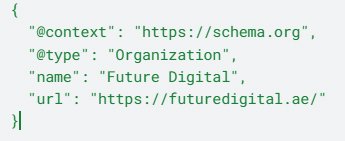
This example describes the organization's name and website. Additional properties should only be added when accurate information is available.
Automating Schema Deployment Through Google Tag Manager and CMS Plugins
Website owners can implement structured data using CMS plugins, custom development, or suitable tag-management workflows.
For WordPress websites, SEO plugins can generate common schema types. Developers working with custom websites can create JSON-LD templates connected to verified database fields.
Google Tag Manager may be used in certain implementations, but server-rendered or directly embedded structured data is often easier to maintain and validate.
Maintaining Schema Integrity During Site Migrations and Updates
Website redesigns, URL changes, product updates, and CMS migrations can affect structured data.
Before launching changes, check that:
- Canonical URLs are correct.
- Schema properties match visible content.
- Business and product information remains accurate.
- Duplicate or conflicting markup is removed.
- Important structured data remains accessible to search engines.
Validation and Performance Tracking
Adding schema markup is only one part of implementation. Businesses must verify that their structured data is technically valid and accurately represents their webpages.
Using Google Rich Results Test and Schema Validator
Use the Google Rich Results Test to identify supported Google rich result eligibility and technical issues.
Use the Schema.org Validator to check whether structured data follows the vocabulary and structure defined by Schema.org.
These tools serve different purposes. Passing a validation test does not guarantee that Google will display a rich result.
Monitoring Search Visibility Through Google Search Console
Google Search Console provides useful information about indexing, search queries, impressions, clicks, average position, and supported rich result enhancements.
However, it does not provide a dedicated report that isolates all voice search impressions and clicks.
Businesses should monitor relevant queries, local search performance, landing pages, and available search appearance reports to assess broader organic visibility.
Measuring Business Impact and Conversions
SEO performance should ultimately connect with business outcomes.
Track enquiries, phone calls, contact form submissions, product purchases, and other meaningful conversions.
Compare performance before and after structured data implementation while considering other SEO changes, seasonal demand, and marketing activity.
The AI Horizon: Schema's Role in Generative AI and Search
Search is expanding beyond traditional blue links. Google's AI features and other generative search experiences can provide summarized responses and connect users with relevant sources.
This makes clear, reliable, well-organized website content increasingly important.
How Structured Data Relates to LLMs and AI Search
Large language models (LLMs) such as those used in ChatGPT, Perplexity, and Gemini process information using different technical systems.
Schema.org structured data can provide machine-readable descriptions of entities and relationships. However, adding schema does not guarantee that an LLM will crawl, retrieve, cite, or recommend a website.
Businesses should combine structured data with original content, accurate facts, relevant internal links, accessible webpages, and credible sources.
Future-Proofing Your Content Strategy for Answer Engines
A sustainable answer engine optimization strategy should focus on the quality and usefulness of published information.
For businesses in Dubai and across the UAE, this means creating location-relevant service pages, answering genuine customer questions, maintaining accurate business details, and keeping technical SEO elements up to date.
Generative engine optimization should complement established SEO practices rather than replace them.
Conclusion: Integrating Voice-First Schema into Your Holistic SEO Strategy
Schema markup for voice search can help search engines understand the content, entities, and relationships presented on a website.
FAQPage, Speakable, LocalBusiness, HowTo, Product, Review, Event, and Breadcrumb markup each serve different purposes. The right implementation depends on the type of website, its content, and its business objectives.
However, structured data alone cannot guarantee voice search rankings, featured snippets, or AI citations. Businesses need accurate information, useful content, strong technical SEO, and a clear understanding of customer search intent.
Want to improve your website's technical SEO and search visibility?
Future Digital helps businesses in Dubai and across the UAE strengthen their online presence through SEO, technical optimization, content marketing, and website development.
Whether you need a structured data audit, an improved SEO strategy, or technical website support, our team can help identify opportunities that align with your business goals.
Contact Future Digital today to discuss your SEO requirements and build a stronger foundation for organic growth.
FAQs
Frequently Asked Questions About Schema Markup for Voice Search
What is schema markup for voice search?
Schema markup for voice search is structured data that helps search engines understand the meaning and context of website content. It describes information such as business details, products, services, articles, and questions, making the content easier for compatible systems to interpret.
Which schema types are most useful for voice search optimization?
FAQPage, LocalBusiness, Article, Product, and BreadcrumbList are useful options depending on the website's content. Speakable is relevant to its documented text-to-speech applications, although Google's implementation has limited eligibility. No schema type guarantees voice search placement.
Does FAQPage schema improve voice search rankings?
FAQPage schema helps identify questions and answers on a webpage, but it does not directly guarantee better voice search rankings. Google also limits FAQ rich results primarily to well-known, authoritative government and health websites.
Is JSON-LD better than Microdata for structured data implementation?
JSON-LD is generally preferred because it keeps structured data separate from visible HTML content. It is easier to manage, update, and implement across larger websites. Google supports JSON-LD, Microdata, and RDFa.
How does LocalBusiness schema help businesses in Dubai?
LocalBusiness schema helps describe important business information, including company name, address, telephone number, and opening hours. Accurate information can support Google's understanding of a business and its relevance to local searches in Dubai and other UAE locations.
How can I check whether my schema markup is working correctly?
Use Google's Rich Results Test to check eligibility for supported rich results and the Schema.org Validator to identify structured data vocabulary and syntax issues. Google Search Console can also help monitor supported search enhancements and indexing problems.
Does schema markup help websites appear in ChatGPT, Gemini, and Perplexity?
Schema markup can provide structured information about website entities and content, but it does not guarantee visibility or citations in ChatGPT, Gemini, or Perplexity. Original information, useful content, accessibility, website quality, and reliable sources remain important.